Galápagos Conservancy

Galápagos Conservancy

Galápagos Conservancy is the leading U.S.-based nonprofit dedicated to helping protect and restore iconic species and ecosystems across the Galápagos Islands.

Galápagos Conservancy is the leading U.S.-based nonprofit dedicated exclusively to protecting and restoring the Galápagos Islands. For more than 40 years, the organization has worked alongside the Galápagos National Park Directorate, scientists, local communities, and conservation partners to protect one of the planet’s most extraordinary centers of biodiversity, home to more than 2,000 species found nowhere else on Earth. Through direct conservation action, strategic grantmaking, research, education, and community engagement, Galápagos Conservancy works to ensure that the archipelago remains a global model for conservation for generations to come.

The entire breeding population of Waved Albatrosses returns each year to just one place on Earth—Española Island in Galápagos. 

The archipelago’s largest bird relies on natural “runways” to spread its wings and take flight. But invasive plants have overrun these runways, making it harder for albatrosses to reach their nesting grounds, while rats prey on their eggs. Galápagos Conservancy helps remove these threats, clearing 30,000 square meters of vegetation across 60 runways to date. And while the species’ population decline is slowing, sustained conservation is critical to keeping these runways clear and ensuring a brighter future for this iconic seabird.
The entire breeding population of Waved Albatrosses returns each year to just one place on Earth—Española Island in Galápagos. The archipelago’s largest bird relies on natural “runways” to spread its wings and take flight. But invasive plants have overrun these runways, making it harder for albatrosses to reach their nesting grounds, while rats prey on their eggs. Galápagos Conservancy helps remove these threats, clearing 30,000 square meters of vegetation across 60 runways to date. And while the species’ population decline is slowing, sustained conservation is critical to keeping these runways clear and ensuring a brighter future for this iconic seabird.
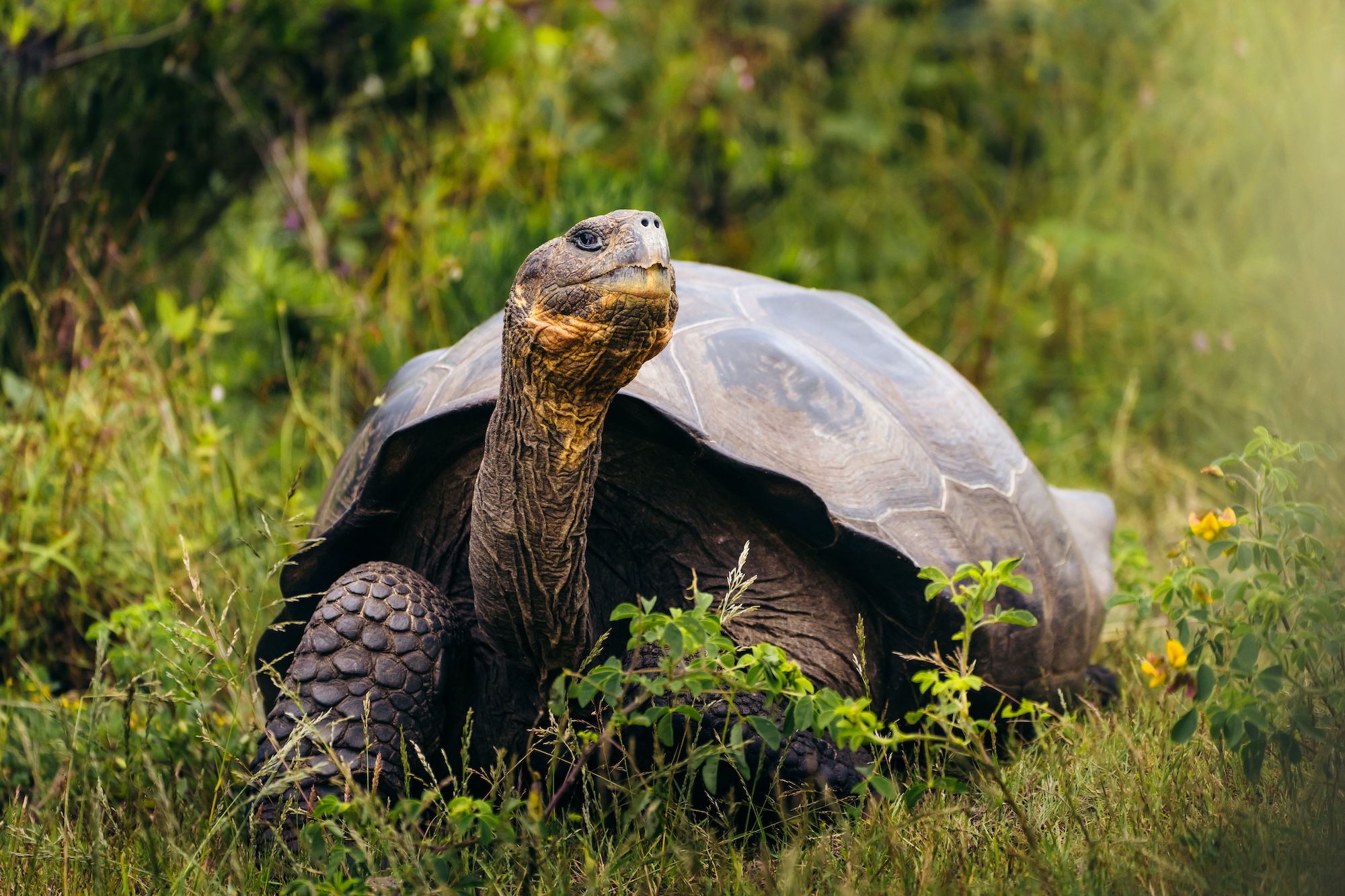
The iconic Galápagos giant tortoise once roamed across nearly every major island in the archipelago. 

But overhunting, invasive species, and habitat loss pushed several populations to the brink of extinction. Galápagos Conservancy leads the way, alongside its partners, in restoring these iconic animals by protecting wild populations, reducing invasive species, and breeding and raising tortoises in conservation centers for future release. In February 2026, 158 giant tortoises returned to Floreana Island, where the species had been extinct for nearly 200 years. Restoring tortoise populations not only protects the species, but the habitats and ecosystems they shape through movement, feeding, and seed dispersal.
The iconic Galápagos giant tortoise once roamed across nearly every major island in the archipelago. But overhunting, invasive species, and habitat loss pushed several populations to the brink of extinction. Galápagos Conservancy leads the way, alongside its partners, in restoring these iconic animals by protecting wild populations, reducing invasive species, and breeding and raising tortoises in conservation centers for future release. In February 2026, 158 giant tortoises returned to Floreana Island, where the species had been extinct for nearly 200 years. Restoring tortoise populations not only protects the species, but the habitats and ecosystems they shape through movement, feeding, and seed dispersal.
The pink iguana, perhaps the rarest reptile on Earth, lives in only one place—the remote slopes of Wolf Volcano on Isabela Island in Galápagos. 

The Critically Endangered species faces a precarious future, with fewer than 300 individuals estimated to remain in the wild. Galápagos Conservancy supports ongoing research and monitoring to better understand the unique reptile, track and monitor its population and population growth, remove invasive species, and protect the habitat the iguanas depend on. With investment in sustained conservation initiatives, this extraordinary species can continue to call Wolf Volcano home.
The pink iguana, perhaps the rarest reptile on Earth, lives in only one place—the remote slopes of Wolf Volcano on Isabela Island in Galápagos. The Critically Endangered species faces a precarious future, with fewer than 300 individuals estimated to remain in the wild. Galápagos Conservancy supports ongoing research and monitoring to better understand the unique reptile, track and monitor its population and population growth, remove invasive species, and protect the habitat the iguanas depend on. With investment in sustained conservation initiatives, this extraordinary species can continue to call Wolf Volcano home.

Watch the pitch

Watch the video through to mark this pitch as seen and unlock the button below.

Voting Hub
climeta
discord-logox-logo
CLIMETA is a registered trademark of Climeta Ltd. Please find out terms and conditions here , our privacy policy here and our cookie policy here.
The information on this website, including content related to Del Mundos NFTs, Del Mundos Editions marketplace, and Climeta initiatives, is provided for informational purposes only and does not constitute legal, financial, tax, investment, or other professional advice. Users should consult their own qualified advisors before making any decisions based on this content.

We make no representations or warranties, express or implied, regarding the accuracy, completeness, reliability, or currency of any information herein. No part of this website constitutes a prospectus, offering document, or solicitation to buy or sell any securities, investments, digital assets, or financial instruments in any jurisdiction.

References to companies, networks, use cases, graphics, or pricing are illustrative only and do not imply affiliation, endorsement, or actual values. Forward-looking statements reflect current views but are subject to risks and uncertainties that may cause actual results to differ materially; we undertake no obligation to update them.

Data from third-party sources has not been independently verified, and we disclaim liability for any inaccuracies. The regulatory environment for blockchain, NFTs, digital assets, and related technologies is evolving and uncertain; users are responsible for ensuring compliance with applicable laws in their jurisdiction.

This website is not directed to any person or entity in jurisdictions where access or use would violate local laws. By accessing this site, you agree to these terms and our linked Terms & Conditions. All rights reserved.

If you spot an error or issue on this website, please contact us at our Discord.